
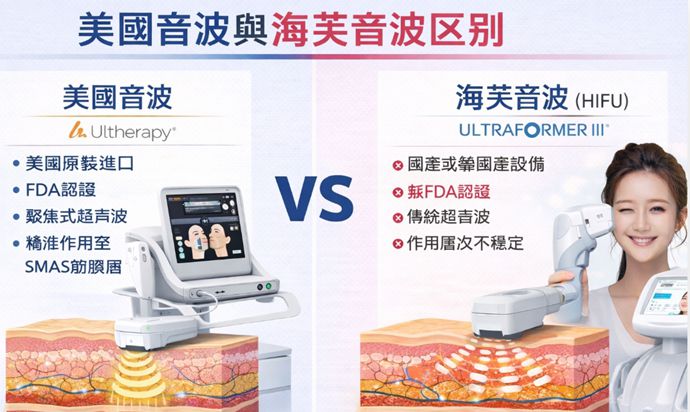

In recent years, non-invasive lifting treatments have gained significant popularity in the aesthetic medicine market, with “Ultherapy” and “HIFU” being particularly popular among beauty enthusiasts. Although both treatments use ultrasonic technology, they differ significantly in terms of their mechanisms of action, target populations, duration of effects, and costs. By 2026, as aesthetic medical technologies continue to evolve, understanding the details of these two treatments will be crucial for those considering ultrasonic lifting. This article will provide an in-depth analysis of the differences between Ultherapy and HIFU to help you make the most suitable choice for yourself.
What is Ultherapy?
Ultherapy, officially named Ultherapy, is a cosmetic treatment developed by the American company Ulthera. It is currently the only non-invasive ultrasonic device globally approved by the US FDA for “facial lifting.” Since its introduction in 2008, it has been used in over 3 million successful treatments worldwide, and there are more than a hundred clinical research papers supporting its effectiveness. In the field of aesthetic medicine, Ultherapy is regarded as the “gold standard” for non-surgical lifting.
Ultherapy’s core technology is Micro-Focused Ultrasound with Visualization (MFU-V). Its most significant feature is the exclusive DeepSEE™ real-time imaging technology, which allows physicians to visualize the subcutaneous tissue structure during the treatment. This ensures that the energy is precisely delivered to the SMAS layer (at a depth of 4.5 mm), making the treatment safer and more effective. The temperature during treatment can reach 65–75°C, stimulating the regeneration and reorganization of collagen and elastin fibers, resulting in a natural, inner-to-outward tightening effect.
Key features of Ultherapy
- FDA approval: The only non-invasive ultrasonic device globally approved by the FDA for lifting purposes.
- Real-time imaging guidance: DeepSEE™ technology enables physicians to see the subcutaneous tissue, reducing the risk of inaccurate treatments.
- Profound penetration: It reaches the 4.5-mm SMAS layer, achieving results comparable to surgical lifting.
- Sustainable effects: The best results are seen 3–6 months after the treatment, with effects lasting approximately 1.5–2 years.
- Absurdly extensive clinical data: Over a hundred international clinical studies support its efficacy, with patient satisfaction rates reaching 95% one year after treatment.

II. What is HIFU?
HIFU (High-Intensity Focused Ultrasound) broadly refers to all types of facelift treatments that use focused ultrasound as their energy source. More specifically, it usually denotes ultrasound devices originating from Korea, such as the well-known Ultraformer III (commonly known as “HIFU Generation 3”) and the latest MPT (Generation 4). Given the size of Korea’s cosmetic industry, these devices have been specially developed to suit the facial structure and skin characteristics of Asians, featuring improvements like silver-white probes that make the treatments more comfortable.
The latest fourth-generation HIFU device, MPT (Micro-Pulse Technology), utilizes exclusive micro-pulse technology and circular probes to precisely target fine lines around the eyes, nasolabial folds, and double chin areas. It also comes with 6.0mm and 9.0mm deep-probe options, which effectively target the fat layer, achieving both facial tightening and localized fat reduction.
Key features of HIFU
- Diverse probe options: Available in depths of 1.5mm, 2.0mm, 3.0mm, 4.5mm, 6.0mm, and 9.0mm
- Developed for Asians: Specifically designed to fit the skeletal structure and skin characteristics of Asians, ensuring more precise treatments
- Affordable price: The cost per session is approximately 60%–70% of that of similar U.S. treatments, making it more accessible to beginners
- Wide range of applications: Can be used not only on the face but also on the neck, arms, abdomen, thighs, and other body areas
- Comfortable treatment experience: The new generation of devices reduces discomfort significantly, making the treatment process much more pleasant

III. American Ultrasound vs. HIFU: A Comparison of Six Key Differences
1. Differences in core technical principles
Although both American Ultrasound and HIFU use ultrasonic technology, there are fundamental differences in the technical details:
American Ultherapy utilizes MFU-V (high-intensity focused ultrasound with real-time imaging) technology. The most crucial advantage lies in the DeepSEE™ real-time imaging system, which allows physicians to visualize the subcutaneous tissue structure before treatment. This enables precise targeting and localized heating, preventing accidental damage to nerves or blood vessels. This “visualized therapy” approach represents the highest standard among current non-invasive lifting devices.
HIFU, on the other hand, uses a “blind” approach, relying on a fixed probe depth setting to determine the energy application area. While this design includes certain safety margins, it does not allow for real-time visualization of the subcutaneous conditions like American Ultherapy does. However, newer Korean models have significantly improved probe accuracy, ensuring that overall safety remains acceptable.
2. Differences in FDA approval and clinical data
This is one of the most prominent differences between the two. American Ultherapy is the only non-invasive ultrasonic device globally approved by the US FDA for facial lifting purposes, and it is supported by over 100 internationally peer-reviewed clinical studies demonstrating its effectiveness. For consumers who value medical safety and clinical validation, this is undoubtedly the strongest guarantee.
In contrast, although HIFU is widely used in Asian markets such as South Korea, Taiwan, and Hong Kong and has received KFDA approval in South Korea, it lacks the US FDA’s approval for facial lifting indications. Additionally, there is relatively limited large-scale clinical data supporting its long-term effectiveness. This does not mean that HIFU is unsafe, but based on rigorous medical evidence, American Ultherapy still holds a clear advantage.
3. Comparison of treatment depth and lifting effects
In terms of treatment depth, both methods can reach the 4.5mm SMAS layer, but their focuses differ:
- American Ultrasound: The standard probe depths are 1.5mm, 3.0mm, and 4.5mm, specifically targeting the SMAS layer for lifting effects. The results are particularly noticeable in “lifting the facial contours,” especially in improving sagging, nasolabial folds, and jawlines.
- Haifu Ultrasound: It offers more probe depth options (up to 9.0mm). In addition to lifting the fascia, the deeper probes can also affect the subcutaneous fat layer, making it suitable for those with both “facial relaxation” and “local fat accumulation” issues.
When it comes to pure lifting effects, the industry generally agrees that American Ultrasound provides more significant and lasting results for moderate to severe facial relaxation, while Haifu Ultrasound is better suited for mild to moderate cases or as a regular maintenance treatment.
4. Comparison of Effect Duration
This is also one of the main concerns for many people when making a choice:
- American Ultrasound: The effects usually peak 3–6 months after the treatment and last for about 1.5–2 years, depending on individual skin conditions and maintenance habits.
- Haifu Ultrasound: The onset of effects is similar to that of American Ultrasound, but the duration is typically 1–1.5 years. Some devices may require additional treatments every 3–6 months to maintain optimal results.
Considering the cost of each treatment, if we calculate the cost per session based on the duration of effects, American Ultrasound may have a higher initial cost, but its longer-lasting results mean that its overall cost-effectiveness is not necessarily inferior to that of Haifu Ultrasound.
5. Price Differences
Price is undoubtedly the most direct factor for most people. Referring to the latest market trends in Taiwan in 2026:
- Ultherapy PRIME full face + neck: Approximately NT$120,000 to NT$160,000 or more (varies depending on the number of treatments and the clinic)
- Ultraformer III / MPT full face: Approximately NT$40,000 to NT$80,000 (varies depending on the model, number of treatments, and the clinic)
The price difference between the two is quite significant. If your budget is limited or this is your first time trying ultrasound-based treatments, Ultraformer III / MPT is indeed a more affordable entry-level option. However, if you have a larger budget and value long-term results, Ultherapy PRIME is a better investment.
6. Pain and recovery time
Both treatments are non-invasive, so you generally don’t need to take any time off work, and there is no significant recovery period—you can go back to your daily activities immediately. In terms of pain:
- Ultherapy: The traditional models are more painful and require topical anesthesia before treatment; the newer PRIME second-generation models have improved comfort, reducing pain by about 30%
- Ultraformer III / MPT: The newer models cause less pain overall. Most patients describe it as a feeling similar to a mild heat or tingling, which is relatively tolerable.

IV. Suitable candidates for Ultherapy and Ultraformer III / MPT
It is recommended to choose the U.S. Sonic Wave treatment for this group.
- Aged 35–55, with moderate to severe facial sagging.
- Fuzzy jawlines, noticeable double chin, and neck wrinkles.
- Priority is given to medical safety certifications; sufficient clinical data is desired.
- With a generous budget, seeking the longest-lasting results from a single treatment.
- Have previously tried Hafei Sonic Wave but were not satisfied with the results; looking to upgrade the treatment.
It is recommended to choose the Hafei Sonic Wave treatment for this group.
- Aged 25–40, with mild to moderate facial sagging; wishing to prevent aging early on.
- With a relatively limited budget, looking to experience sonic wave treatments at a lower cost.
- In addition to the face, also hoping to improve areas such as the neck, arms, or abdomen.
- Slight double chin or localized fat accumulation
- Would like to maintain the results regularly, with booster treatments every six months to a year
V. The importance of choosing the right doctor: a factor more crucial than the equipment
Whether you choose American Ultrasound or Hi-Frequency Ultrasound, the skills and experience of the practitioner are often what determine the final outcome more than the equipment itself. An experienced doctor can:
- Develop a personalized treatment plan based on your face shape, bone structure, and degree of skin laxity
- Optimally distribute the number of treatments using different probes to achieve the best value for money
- Avoid areas with dense nerve bundles and blood vessels to reduce the risk of post-treatment discomfort
- Combine with other treatments such as radiofrequency, botulinum toxin, or hyaluronic acid for a comprehensive approach
We recommend that before deciding to undergo any ultrasound facelift treatment, you choose a reputable medical institution and consult a licensed professional doctor for a thorough evaluation. Do not settle for low-cost options from unlicensed clinics or non-medical beauty establishments.
VI. The latest trends in ultrasound facelift technology in 2026
In 2026, ultrasonic radiofrequency technology continued to evolve, with several notable trends emerging:
- U.S. Ultrasound PRIME Generation 2: The latest model features significant improvements in pain control and energy distribution, resulting in greatly enhanced comfort during treatments.
- Fourth-generation Hafei Ultrasound MPT: Utilizing micro-pulse technology, its circular probe allows for precise 360-degree treatment, making it particularly effective for areas around the eyes and delicate regions.
- Ultrasound + Radiofrequency Combination Therapy: More and more clinics are offering combined treatments that combine the firming effects of ultrasound with the tightening benefits of radiofrequency, achieving a synergistic effect greater than the sum of their parts.
- Personalized Precision Treatment: By integrating AI-based facial analysis, more tailored treatment plans can be developed based on the degree of laxity in different areas.
VII. Frequently Asked Questions (FAQ)
Q1: Can U.S. Ultrasound and Hafei Ultrasound be done on the same day?
It is generally not recommended to perform both types of ultrasound treatments on the same area on the same day, as the combination of energies may cause excessive heating and increase the risk of side effects. If combining the two treatments is necessary, it is advised to wait at least 3–6 months and have it assessed by a professional physician to determine suitability.
Q2: Is special care required after ultrasonic radiofrequency treatment?
After the treatment, the skin may experience mild redness or sensitivity. It is recommended to increase moisturization for 1–3 days after the treatment, avoid sun exposure, and use sunscreen. Maintaining regular skincare habits (moisturization, sun protection, antioxidants) will help prolong the benefits of the treatment.
Q3: Can I undergo ultrasound therapy during pregnancy or while breastfeeding?
It is not recommended. During pregnancy and breastfeeding, it is not safe to undergo any form of ultrasound or radiofrequency therapy to ensure the safety of both mother and baby. It is advised to wait until after breastfeeding ends and consult a doctor before proceeding with such treatments.
Q4: How soon can I see results after ultrasound therapy?
The effects of ultrasound therapy are gradual. You will start to notice firming results about 1–3 months after the treatment, with the most noticeable effects occurring between 3–6 months. After that, collagen production continues, and the overall results can last for 1.5–2 years (for Ultherapy in the U.S.) or 1–1.5 years (for HIFU).
Q5: Where is the best place to receive Ultherapy or HIFU in the U.S.?
It is recommended to choose a reputable medical spa with extensive experience in ultrasound treatments, and ensure that the practitioner has the necessary qualifications. In Seoul, South Korea, many specialized cosmetic clinics offer Ultherapy and HIFU treatments using advanced equipment and strict medical standards. Regardless of where you choose to receive the treatment, it is crucial to consult in detail and verify the practitioner’s qualifications and the type of equipment used.
Summary: How to choose between Ultherapy and HIFU in the U.S.?
Based on the above analysis, we can summarize the differences between the two as follows: Ultherapy is the top choice due to its stronger effects, longer-lasting results, and higher safety; HIFU, on the other hand, offers better value for money, a wider range of applications, and lower entry barriers.
By 2026, as ultrasound therapy technology continues to advance, consumers should adhere to several key principles when choosing any type of treatment:
- Choose reputable medical institutions and licensed practitioners; avoid unlicensed clinics.
- Before the procedure, a detailed facial assessment and personalized treatment plan are conducted.
- Understand your level of skin laxity, budget, and desired results to make a rational choice about the right treatment option.
- After the procedure, take proper sun protection and moisturizing steps, and maintain healthy lifestyle habits to prolong the effects of the treatment.
- If you experience any discomfort, seek immediate follow-up consultation with your treating physician.
We hope this article provides you with a clear basis for making your choice between ultrasonic treatments in the United States. Remember, the most suitable treatment is not necessarily the most expensive one, but rather the one that best meets your current skin needs and budget. If you have any questions, please feel free to schedule a consultation with a professional doctor to ensure your anti-aging journey starts on the right track.


![[2026 Latest Review] Comprehensive Analysis of the Second Generation Ulthera Device in the United States: Key Updates, Actual Results, Prices, and Target User Groups – All Explained in One Place](https://oss.cceeo.com/cceeo-wp/muse/uploads/美国音波-150x150.jpg "[2026 Latest Review] Comprehensive Analysis of the Second Generation Ulthera Device in the United States: Key Updates, Actual Results, Prices, and Target User Groups – All Explained in One Place缩略图")