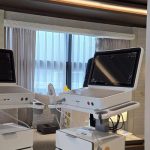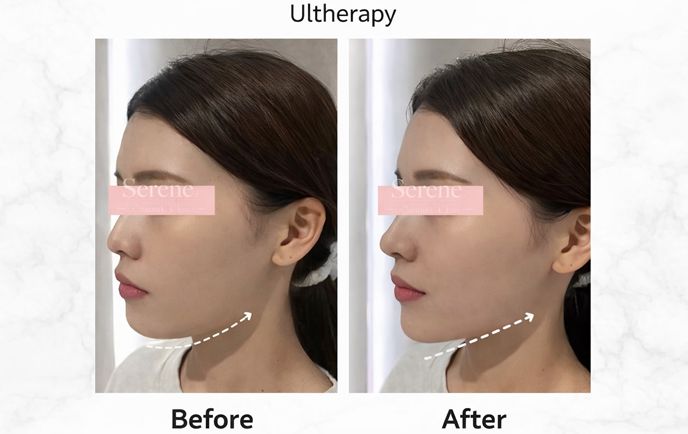

After undergoing the advanced version of Ultherapy or Ultherapy Prime, many people are most curious about questions like: “What changes will my face experience?” “How many days will it take to see results?” “When will the swelling subside?” These questions often leave newcomers both eager and anxious. This article will detail the visual and sensory changes from day 1 to day 15 after the procedure, providing also recommendations for post-treatment care from reputable Korean dermatology clinics, so you can be well-informed about the entire recovery process.
Before the procedure: Why doesn’t the advanced version of Ultherapy produce immediate results?
Before discussing the daily changes, it’s important to understand that the effects of the advanced Ultherapy are gradual, not immediate.
The advanced Ultherapy works by using high-intensity focused ultrasound (HIFU) to precisely target the SMAS layer deep within the skin (at a depth of 4.5 mm). Without damaging the epidermis, this treatment creates tiny heat lesions that trigger the body’s natural repair mechanisms, stimulating the production and reorganization of collagen. This regeneration process takes time—usually 3 to 6 months before the full effects of lifting can be observed.
Therefore, the changes observed from day 1 to day 15 after the procedure are more related to the recovery period than to the onset of visible results. Understanding this helps you stay calm during the initial days when you may experience mild discomfort.
Detailed daily updates on changes after 1–15 days of the advanced Ultherapy procedure
Day 1: On the day of treatment – mild reactions are normal
The day immediately after the treatment is when the body’s immediate reactions become apparent.
- Visual changes: The treated area may show slight redness, similar to the glow after sun exposure. Some people may also experience mild swelling, and the area may feel warm to the touch.
- Feelings: There may be a slight stinging or tingling sensation on the skin, which is a normal neurological reaction after the ultrasonic treatment. Some people may experience more noticeable soreness and swelling in areas where bones protrude, such as near the cheekbones or jawline.
- Outdoor activities: Most people can go out normally; wearing a mask or applying some foundation can help cover up any visible effects.
- Key care steps: Apply cold compresses for 15–20 minutes to reduce swelling; use medical repair masks to hydrate and soothe the skin; avoid wearing heavy makeup.
Days 2–3: Mild reactions continue but begin to subside.
- Visual changes: The redness gradually fades, but some people may experience slightly increased swelling on the second day, especially around the eyes—this is a normal inflammatory response during the healing process. A small percentage of people may develop mild bruising (about 5–10%).
- Feelings: The skin becomes drier and feels slightly tight; occasional soreness may occur upon touch.
- Important note: Don’t worry if there is more swelling on the second day—it’s a normal phenomenon and does not indicate worsening.
- Key care steps: Increase hydration by using serums containing hyaluronic acid or ceramides; avoid any skincare products with acids such as fruit acids or salicylic acid.
Days 4–5: The redness has mostly subsided, and the skin begins to stabilize.
- Visual changes: For the vast majority of people, the redness has completely faded, and the skin looks normal again. Any bruising that may have appeared also starts to turn yellow-green and gradually disappears.
- Feelings: The dryness of the skin still persists, and some people may experience mild “stinging sensations” or soreness upon pressure in the deeper layers of the skin, such as the neck and jawline. This is a sign that the collagen tissue at those depths is beginning to repair itself.
- Key points for care: You can resume light daily makeup (avoid heavy makeup) and continue to use high-factor sunscreen (SPF 50+).
Days 6–7: By the end of the first week, the appearance has fully recovered.
- Changes in appearance: By the end of the first week, the appearance of the vast majority of people has returned completely to its pre-procedure state, with all redness and bruising having largely subsided.
- Feelings: The surface of the skin tends to stabilize, and occasional tightness or soreness in the deeper layers is significantly reduced. Some individuals with sensitive skin may still experience localized tenderness occasionally.
- Perception of results: At this point, you may feel that the effects are not yet noticeable—this is completely normal! The regeneration of collagen has just begun, so there’s no need to rush.
- Key points for care: You can gradually resume your regular skincare routine, but it is still recommended to avoid high-temperature environments (such as saunas and steam rooms) and irritating skincare products (such as retinoids).
Days 8–10: The deeper layers of the skin continue to repair themselves, and subtle improvements begin to appear.
- Changes in appearance: The skin looks normal, with no obvious post-procedure scars. Some observant individuals may notice that their skin has improved in texture—it appears brighter, smoother, and the pores may seem slightly smaller.
- Experience: Discomfort in the deeper tissues almost completely disappears, with only occasional mild tenderness when pressing certain areas (this may persist until weeks 4–6).
- Mental Adjustment: Week 2 is often a time of anxiety for many people—who feel they’ve spent a lot of money without seeing results. Remember, collagen is being rebuilt invisibly inside your body; give it some time.
Days 11–13: A gradual improvement in skin texture
- Visual Changes: By the second half of week 2, some people begin to notice noticeable improvements in skin texture—more shine and elasticity. Subtle firming effects around the face, such as a clearer jawline or slightly lifted cheeks, may also become apparent.
- Important Note: The “firming sensation” you experience at this stage is not the final result but an early indication. Do not conclude that the treatment is not effective based on these initial feelings.
- Next Steps: You can start taking oral collagen supplements to support internal collagen regeneration. Continue practicing sun protection habits.
Days 14–15: Complete recovery—wait for the peak effects in 3 months
- Visual Changes: Two weeks after the procedure, all immediate post-treatment effects have completely subsided. The skin has returned to its normal state and appears even healthier than before, with increased brightness and texture. The initial firming effects continue to improve.
- Expected Results: This is just the beginning of the effects. The full benefits of lifting and contouring will be most evident 3 to 6 months after the procedure and can last for 24 to 30 months (according to data from Ultherapy Prime generation 2).
- Follow-up Recommendations: Schedule follow-up appointments as advised by your doctor to assess the results and determine if additional treatments are needed.

Quick reference chart for changes 1–15 days after treatment
| Number of days | Visual appearance | Primary sensations | Key points for care |
|---|---|---|---|
| Day 1 | Slight redness, mild swelling | Stinging, burning sensation | Cold compresses, reparative masks |
| Days 2–3 | The swelling may increase slightly before subsiding. | Dryness and tightness | Provide intense hydration and avoid acids. |
| Days 4–5 | The redness has mostly subsided. | There may be mild dull pain in the deeper areas. | Light makeup and sunscreen are allowed. |
| Days 6–7 | The appearance has fully returned to normal. | Occasional tenderness | Return to normal skincare routines and avoid high temperatures |
| Days 8–10 | Slight improvement in skin texture | Almost no discomfort | Use sunscreen and hydrate regularly |
| Days 11–13 | Increased shine; initial definition of contours appears | Comfortable; occasional sense of tightness | Supplement with oral collagen |
| Days 14–15 | Complete recovery with improved texture | Comfy and promising results | Regular skin care and follow-up appointments |
Korean dermatology’s golden rules for post-treatment care
After receiving treatment with the American version of the ultrasonic knife at top-tier dermatology clinics in Gangnam or Cheongdam-dong, Korea, the clinic usually provides a detailed guide to post-treatment care. Here are the key points:
① Sun protection is of utmost importance
After the procedure, the skin’s barrier function is temporarily weakened, reducing its ability to protect against ultraviolet rays. Without proper sun protection, this can easily lead to pigmentation and even affect the regeneration of collagen. It is recommended to use broad-spectrum sunscreen with an SPF of 50+ and PA++++, and also use physical barriers such as hats and umbrellas.
② A list of things to avoid in the first week after treatment
- ❌ Saunas, steam baths, and hot springs (high temperatures can exacerbate inflammatory reactions)
- ❌ High-intensity aerobic exercise (sweating can irritate the skin after surgery)
- ❌ Skin care products containing alcohol, fruit acids, salicylic acid, or retinol
- ❌ Deep-stimulating treatments such as acupressure, massage, or gua sha
- ❌ Drinking alcohol (affects blood circulation and skin recovery)
③ Dietary supplements can enhance these effects
The synthesis of collagen requires adequate nutritional support; it is recommended to consume the following foods after surgery:
- ✅ Vitamin C (kiwifruit, oranges, bell peppers): promotes collagen synthesis
- ✅ High-quality proteins (fish, eggs, tofu): provide amino acids necessary for collagen production
- ✅ Antioxidant-rich foods (blueberries, spinach): reduce damage from free radicals to the skin
- ✅ Adequate hydration (1,500–2,000 ml per day): keeps the skin moist
④ Getting enough sleep is a free “effect multiplier”.
During sleep, the body produces large amounts of growth hormone, making it the most active time for skin self-repair. Staying up late significantly slows down collagen synthesis, reducing the effectiveness of treatment. It is recommended to get 7–8 hours of high-quality sleep each night after the procedure.
Common Questions & Answers
Q1: Is it normal to feel numbness in the face after the procedure?
Mild numbness or a decreased sense of touch is a normal reaction, caused by the ultrasonic energy stimulating the subcutaneous nerves. This usually subsides naturally within 2–4 weeks. If the numbness persists for more than a month or worsens, you should seek medical attention immediately.
Q2: My face is more swollen on the 3rd day after the procedure than on the first day—is this a sign that something went wrong?
There’s no need to worry. Slight swelling increasing on the 2nd–3rd days after the procedure is a normal phenomenon (medically known as “secondary tissue reaction”) and indicates that the deeper tissues are beginning to repair themselves. The swelling usually subsides significantly by the 4th–5th day.
Q3: If I don’t see any results 15 days after the procedure, does that mean it didn’t work?
That’s completely normal. The core principle of the American version of this treatment is to promote the “regeneration” of collagen, a process that takes 3–6 months. 15 days after the procedure is just the end of the recovery period, not the time to assess its effectiveness. It is recommended to take before-and-after photos after 3 months to get an objective evaluation of the results.
Q4: What precautions should I take when flying back to Hong Kong after having this treatment in Korea?
It is recommended to wait at least 24–48 hours after the procedure before flying. The low humidity in the cabin (around 20%) can cause the skin to become drier after the treatment. It is advised to carry a moisturizing spray and use it every hour; wear a mask throughout the flight to protect your skin; reduce eye strain to avoid fatigue, and drink plenty of water.
Q5: Can other treatments be done after the US version of the ultrasound therapy?
For the first month after the procedure, it is recommended to avoid other treatments that involve skin incisions, such as microneedling, chemical peels, or lasers. Gentle hydrating treatments and LED light therapy can usually be performed 2–4 weeks after the procedure, but it is important to consult your doctor first.
How to choose a Korean clinic for ultrasound therapy?
Since you are choosing the US version of the ultrasound therapy, choosing the right institution is very important. When seeking treatment in Korea, please pay special attention to the following points:
- Verify official authorization: Make sure the clinic provides an official certification from Merz Aesthetics, confirming that they are using genuine Ultherapy Prime equipment.
- Performed by licensed physicians: Ultrasound therapy is a medical procedure and must be performed by a licensed physician certified by the Korean Ministry of Health and Welfare, not by a nurse or technician.
- Thorough pre-treatment consultation: A legitimate clinic should conduct a thorough skin assessment before the procedure, taking into account your medical history, allergies, and desired results. Do not proceed without proper consultation.
- Beware of excessively low prices: The market price for a full-face US version ultrasound therapy in Korea is typically between 500,000 and 2 million Korean won. If the price is much lower (such as below 200,000 Korean won), it is likely that a Korean version of the device (such as DOUBLO) or second-hand equipment is being used.
- Use reputable reservation platforms: Reserving through trusted medical beauty reservation platforms like BeautsGO allows you to verify the clinic’s qualifications and read reviews from other patients, thus reducing the risk.
Summary: 15 days is just the beginning; patience is the best form of “post-treatment care.”
During the 1 to 15 days after the treatment with the American version of the ultrasonic device, the body goes through a transition period from “receiving energy stimulation” to “initiating deep-level repair.” Redness, dryness, and mild numbness are all normal and temporary effects that usually subside completely within a week. The real transformation occurs deep within the skin, where it is not visible to the eye, and requires patience as collagen is gradually rebuilt.
15 days after the treatment marks the end of the visible recovery phase and the beginning of the actual results. By protecting your skin from the sun, keeping it hydrated, getting enough sleep, and maintaining a balanced diet, you can help your body achieve the best possible results in this “inner-to-outward anti-aging process.”
For more information about the American version of the ultrasonic device, including detailed fees and reservation guidelines for various clinics in Korea, please visit our website for related articles!